
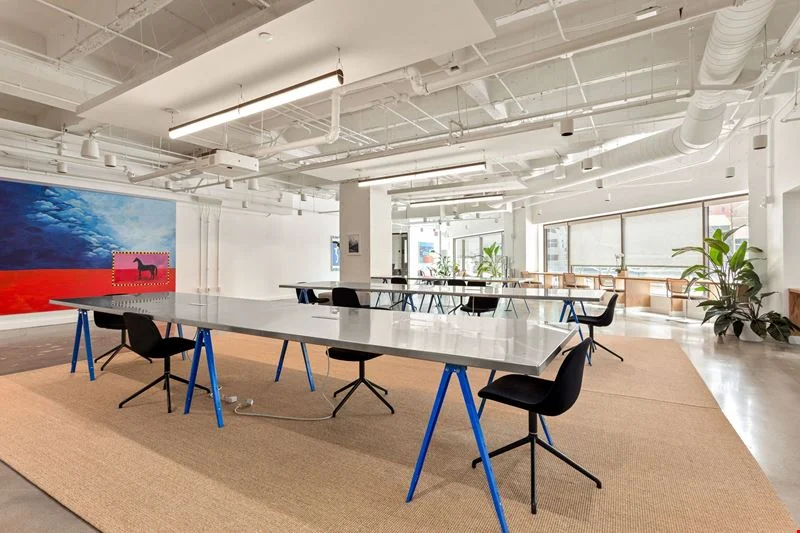
A short-term lease offers more versatility if your needs are likely to change. A long-term lease provides greater stability for businesses with established teams and predictable space requirements. The right choice relies on your company’s plans, finances, and day-to-day operations.
Office Lease Types: Short vs. Long-Term Options
Short-Term Office Leases
This option can work well for startups, small teams, companies entering a new market, or businesses working through a period of change. It can also make sense when you need temporary office space while planning a more permanent setup.
The tradeoff is cost. Shorter lease terms may come with higher monthly rates, fewer customization options, or less certainty about renewal.
Key Features of Short-Term Office Leases
- Flexible commitment: Move, expand, or change your workspace sooner as business needs evolve.
- Lower risk: Avoid committing to office space you may outgrow or no longer need.
- Faster planning: Secure a workspace for a temporary project, new team, or short-term business need.
- Potentially higher monthly costs: Pay more per square foot than you might under a longer agreement.
- Limited customization: Work with the existing layout and amenities rather than investing heavily in a space you may leave soon.
Long-Term Office Leases
Longer Kansas City office leases can offer more predictable occupancy costs and greater opportunities to negotiate better terms. Businesses may also have more options for customizing their offices to support specific workflows, branding, and team needs.
The main drawback is reduced flexibility. If your team shrinks, your business relocates, or you need more space, changing your arrangement before the lease ends can be expensive.
Key Features of Long-Term Office Leases
- Greater stability: Provide a consistent location for employees, clients, and business operations.
- Potential cost savings: Negotiate more favorable rental rates or concessions in exchange for a longer commitment.
- Room for customization: Invest in layouts, furnishings, and improvements that support your team’s needs.
- Predictable planning: Build long-term budgets around an established lease agreement, accounting for any scheduled rent increases.
- Less flexibility: Changing locations or reducing your space can be difficult before the lease expires.
Main Differences Between Short & Long-Term Office Leases
Efficiency
A short-term lease can help businesses avoid paying for unused space while their teams and operations are still changing. It also limits the amount of money tied up in a long-term commitment. However, frequent moves can disrupt employees, require new equipment or furniture, and create additional administrative work.
A long-term lease gives businesses a consistent base of operations. Employees can settle into routines, and companies can invest in a workspace designed around their processes. Predictable occupancy costs can also make financial planning easier, depending on the terms of the agreement.
Consider the full cost of occupying an office, not just the monthly rent. Utilities, maintenance, parking, furniture, moving expenses, and potential build-out costs can all affect the value of a lease.
Flexibility
Short-term leases offer more opportunities to adjust as your company grows, downsizes, or changes its operating model. They are especially useful when future staffing levels or revenue are difficult to predict.
Long-term leases require more planning. A growing company could run out of room, while a business that downsizes might continue paying for space it no longer needs. Before signing, review options for expansion, renewal, subleasing, and early termination.
Flexibility also depends on the landlord and the specific agreement. A shorter lease is not automatically more flexible in every respect, so review the actual terms before making a decision.
Company Culture
A short-term lease can give a company time to determine what kind of environment its team needs. It may be a practical starting point for a new business or a team moving to a hybrid work model.
A long-term office provides more consistency. Employees can build routines, teams have a reliable place to collaborate, and the company can create a workspace that reflects its culture. A well-located office with useful amenities can also make the workday more convenient and give employees more reasons to spend time together in person.
Think about how your team works best. If employees rarely come into the office, a smaller or more flexible arrangement may make sense. If collaboration, client meetings, and in-person training are central to your business, a dedicated office may be worth a longer commitment.
Choosing Between Short-Term & Long-Term Office Leases
When a Short-Term Lease is Right For Your Business
Consider a shorter lease if:
- Your business is growing quickly. You may need more space as you hire, and a shorter commitment gives you more options.
- You’re entering a new market. Test a location before committing to a permanent office.
- Your team size is uncertain. Avoid paying for more space than you need while staffing levels change.
- You need temporary office space. Accommodate a project, transition, or temporary team without a multi-year lease.
- You’re still defining your workplace needs. Learn what layout, location, and amenities work best before making a longer commitment.
Keep in mind that short-term options may be harder to find in certain markets, and higher monthly rates can offset some of the flexibility they provide. Compare the total cost against the risks of committing to a longer lease.
When a Long-Term Lease is Right For Your Business
Consider a longer lease if:
- Your team has predictable space requirements. You know how many employees need office space and have a reasonable forecast for future growth.
- You want consistent occupancy costs. A negotiated lease can provide greater visibility into future rent expenses, subject to increases and other lease terms.
- Your office supports daily operations. A dedicated location helps employees collaborate, meet clients, and maintain workflows.
- You want to customize your space. A longer commitment may justify investing in office improvements, furniture, and technology.
- Location is central to your business. Secure a consistent location in an area that works for your employees, clients, and partners.
Before signing, consider how your business could change over the lease term. Review renewal options, rent escalations, maintenance responsibilities, and any provisions that could affect your ability to expand or exit the agreement.
Get Started With lightwell KC
At lightwell KC, businesses choose from a range of office spaces, from individual suites to full-floor layouts, in the heart of downtown Kansas City. Tenants also have access to amenities that support the workday, including conference rooms, an on-site fitness center, dining options, and convenient access to the KC Streetcar.
If you’re ready to find an office that fits your business, contact lightwell KC to discuss available spaces and leasing options.
Recent Comments